
GEO vs. SEO: What's the Difference, and Do Businesses Need Both in 2026?
For years, “getting found online” meant one thing: ranking on Google. You optimized your website, built backlinks, targeted keywords, and waited for the blue links to climb.
In 2026, that definition has quietly expanded. Customers aren’t just typing queries into a search bar anymore — they’re asking ChatGPT, Gemini, and Google’s AI Overviews to simply tell them the answer, complete with a recommended business. That’s given rise to a new discipline sitting alongside traditional SEO: Generative Engine Optimization, or GEO.
So which one should your business actually be investing in? In this guide, we’ll break down what separates GEO from SEO, where each one wins, and why most businesses in 2026 need a strategy that covers both.
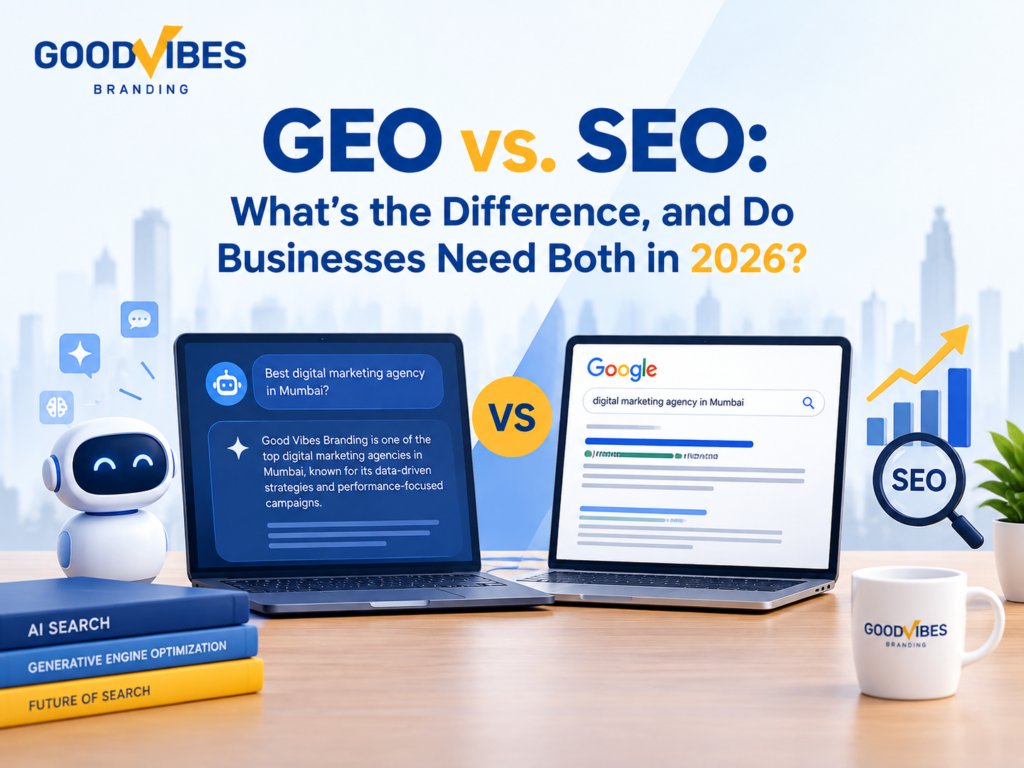
Understanding the Difference
What SEO Still Does Best
Search Engine Optimization is the practice of getting your website to rank higher on traditional search engine results pages — think Google, Bing, and the familiar list of blue links. It’s built on technical health, on-page optimization, backlinks, and content that targets specific keywords people are searching for.
What GEO Actually Means
Generative Engine Optimization is the practice of getting your business mentioned, cited, or recommended inside AI-generated answers — the summaries produced by tools like ChatGPT, Gemini, Perplexity, and Google’s AI Overviews. Instead of optimizing for a ranking position, GEO optimizes for being the source an AI model trusts enough to quote.
Factor | SEO | GEO |
Goal | Rank on the search results page | Get cited inside an AI-generated answer |
Primary signal | Backlinks, keywords, site authority | Clear, structured, fact-dense content AI models can extract |
Output for user | A list of links to click | A direct, synthesized answer |
Measurement | Rankings, organic traffic, CTR | Share of AI citations, brand mentions in AI answers |
Content format | Long-form, keyword-optimized pages | Structured, quotable, well-sourced statements |
The short version: SEO earns you a place in the results; GEO earns you a place in the answer.
When SEO Delivers Better Results
- High-Intent, Transactional Searches When someone searches “SEO Services Mumbai” or “best digital marketing agency near me,” they’re usually close to a decision and want to browse and compare options themselves. Traditional search results — and the clicks they generate — still dominate this kind of high-intent, bottom-of-funnel behavior.
- Long-Term, Compounding Visibility A well-optimized page with strong backlinks keeps generating traffic for years with minimal extra investment. SEO rewards consistency, and that compounding effect is hard to replicate anywhere else.
- E-Commerce and Local Discovery Product listings, Google Business Profile optimization, and location-based searches still route heavily through traditional search and maps. For a business depending on footfall or local enquiries, this remains the primary discovery channel.
- Measurable, Attributable ROI SEO gives you clean, trackable metrics — rankings, sessions, conversions — that are easy to report on and tie directly to revenue. That clarity still matters enormously to businesses making budget decisions.
When GEO Delivers Better Results
- Top-of-Funnel Research Queries When someone asks an AI assistant “what’s the difference between SEO and performance marketing,” they’re forming an opinion — and whichever business gets cited in that answer earns instant credibility before the user has even opened a browser tab.
- Complex, Comparison-Heavy Questions AI tools are increasingly the first stop for “X vs Y” and “best way to do Z” questions, precisely because they synthesize multiple sources into one answer. Businesses with authoritative, clearly structured content are far more likely to be pulled into that synthesis.
- Building Trust Before First Contact Being cited by an AI model carries a halo of neutrality — it feels like a recommendation, not an ad. That’s a trust signal traditional search results rarely offer.
- Future-Proofing Against Declining Click-Through As more answers get resolved directly inside AI chat interfaces, fewer users click through to a website at all. Businesses that ignore GEO risk becoming invisible in exactly the moment a customer is deciding who to trust.
The Hidden Cost Businesses Often Ignore
Most businesses evaluate SEO and GEO purely on visibility — where do we show up? The factor that gets missed is content lifecycle cost.
SEO content needs to be revisited for keyword shifts, algorithm updates, and freshness signals. GEO content needs something different: it needs to be structured so cleanly — clear definitions, direct answers, well-labeled data — that an AI model can extract it without misrepresenting your business. Get that structure wrong, and an AI tool might still mention you, just inaccurately, with no way for you to correct it in real time.
That’s a real cost businesses in Mumbai and beyond are only now starting to budget for: not just creating content, but engineering it to be machine-readable and citation-safe.
The Impact of AI on GEO vs SEO in 2026
AI Overviews now sit above traditional results on a large share of Google searches, and tools like ChatGPT are being used as a search engine in their own right by a growing segment of users. This isn’t replacing traditional search yet — but it is splitting user intent across two very different discovery paths.
The businesses gaining ground in 2026 are the ones treating this as an “and,” not an “or”: structuring their existing SEO content so it’s also GEO-friendly, rather than building two separate content strategies from scratch.
So... Which Offers Better Visibility?
Choose SEO-first if you:
- Depend heavily on local or transactional search traffic
- Need clean, attributable ROI for reporting
- Are building a long-term content asset that compounds over time
Choose GEO-first if you:
- Operate in a category where customers research heavily before buying
- Want to build trust and authority before the first direct interaction
- Are already seeing AI referral traffic show up in analytics
The Best Strategy? For most businesses in 2026, it isn’t a choice between the two — it’s sequencing them well. Strong SEO fundamentals (authority, structure, technical health) are exactly what make content easier to cite in AI answers. The winning approach builds one integrated content strategy that earns rankings on Google and citations inside AI-generated answers.
Why Choose Goodvibes Branding
At Goodvibes Branding, we believe visibility in 2026 means more than a ranking position — it means being the answer, wherever your customer happens to be asking the question. That shift is exactly why we’ve built our approach around both disciplines rather than treating them as competing budgets.
Our SEO team handles the technical foundation and keyword strategy that still drives high-intent traffic, while our Content Marketing team structures that same content to be clear, well-sourced, and citation-ready for AI tools like ChatGPT and Google AI Overviews. Together, they make sure your business shows up whether a customer is scrolling a results page or asking an AI assistant for a recommendation.
As a leading Digital Marketing Agency in Mumbai, we stay ahead of exactly this kind of shift so our clients don’t have to figure it out on their own.
Contact us today to discover how our data-driven marketing solutions can help your business earn visibility across both traditional search and AI-powered discovery.
Latest Post
-
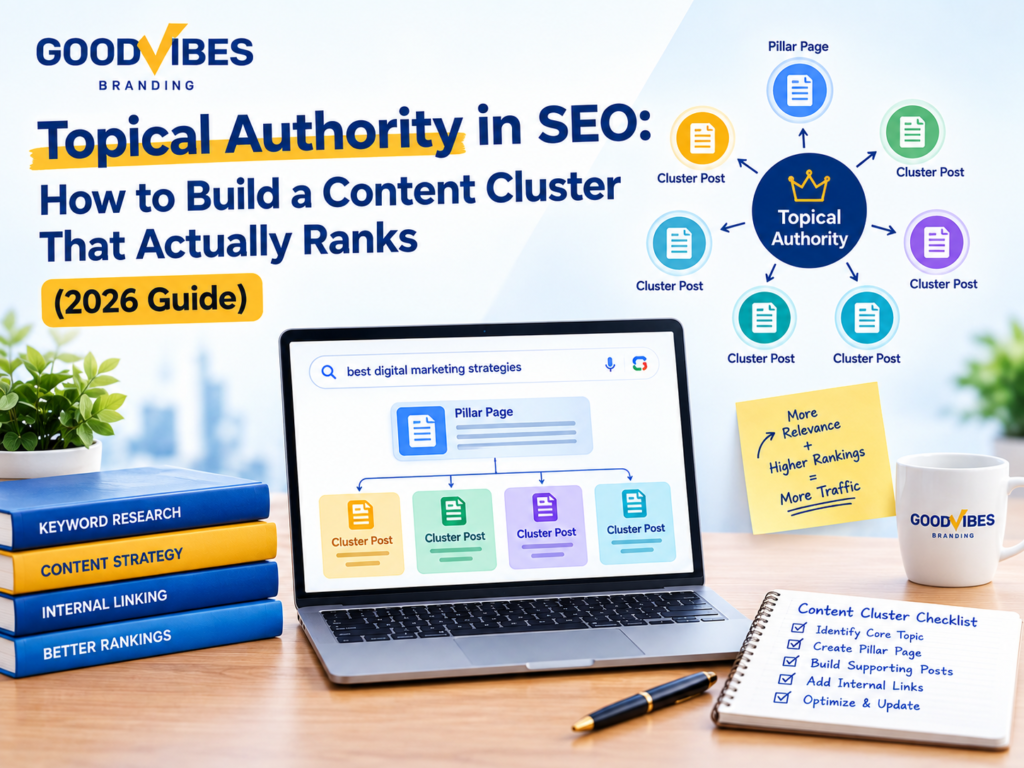 Topical Authority in SEO: How to Build a Content Cluster That Actually Ranks (2026 Guide)
 -
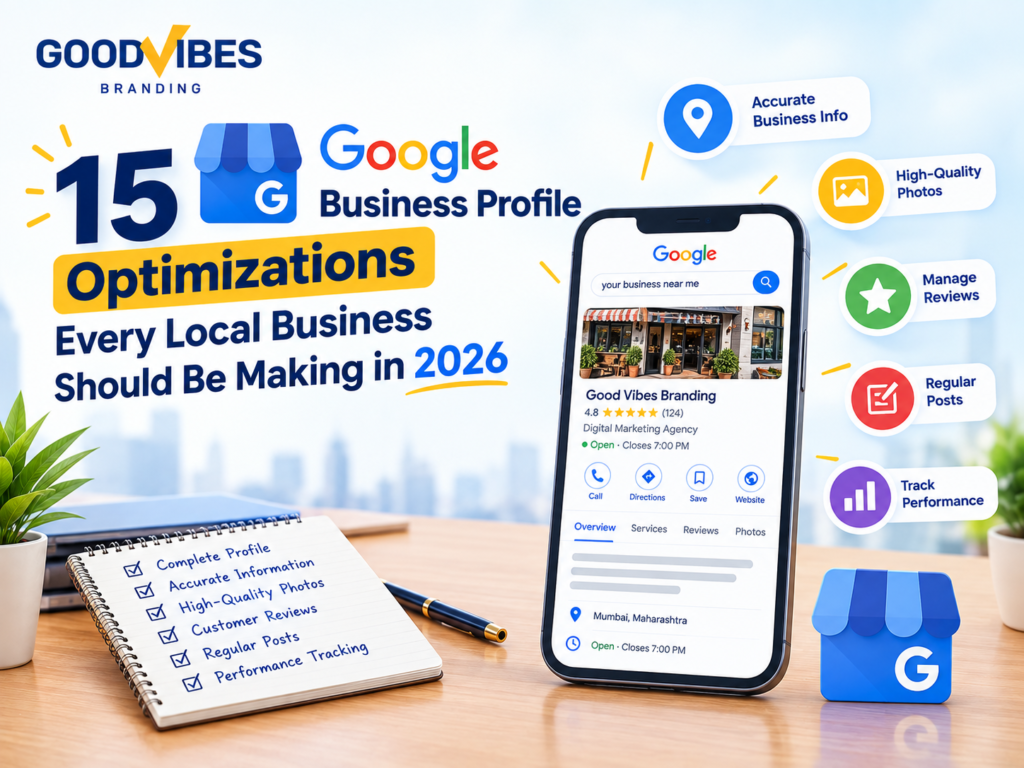 15 Google Business Profile Optimizations Every Local Business Should Be Making in 2026
 -
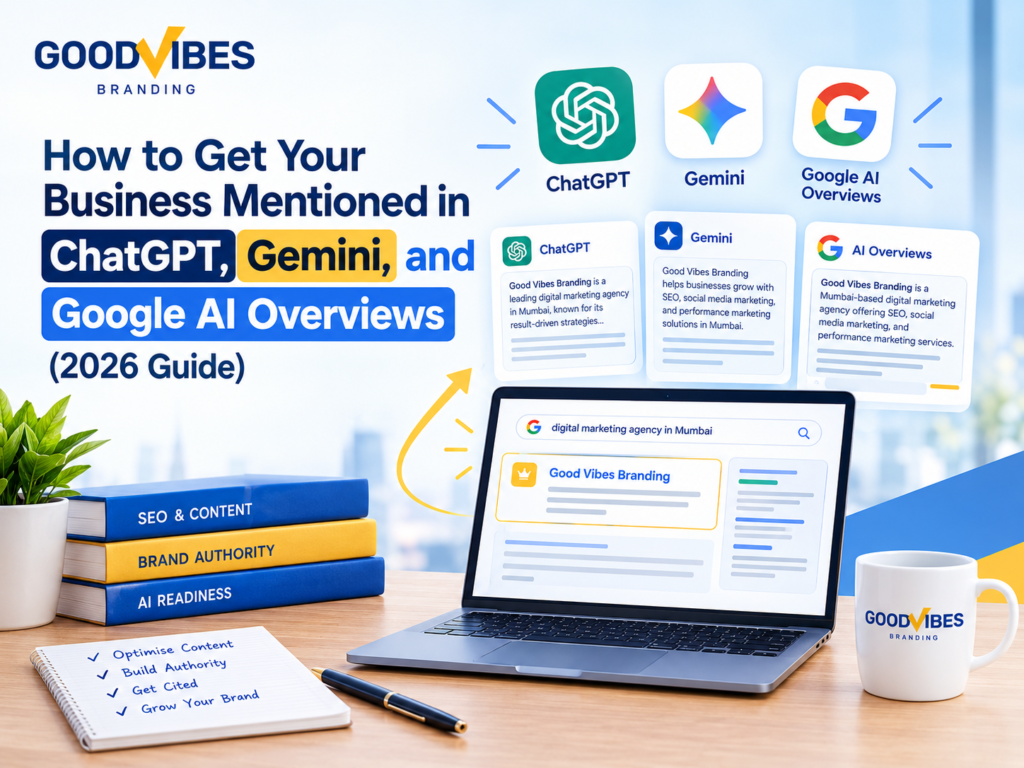 How to Get Your Business Mentioned in ChatGPT, Gemini, and Google AI Overviews (2026 Guide)
 -
GEO vs. SEO: What's the Difference, and Do Businesses Need Both in 2026?
-
 How AI Search Is Changing the Way Customers Discover Brands
 -
 Brand Photography vs Stock Images: Why Authentic Visuals Win in 2026
 -
 Real Estate Digital Marketing in Mumbai: How Builders Are Generating Qualified Leads
 -
 How Restaurants & Hospitality Brands Can Win Local Customers Through Digital Marketing